Loading...
Serving Coconut Creek, FL and surrounding areas. (754) 294-8695
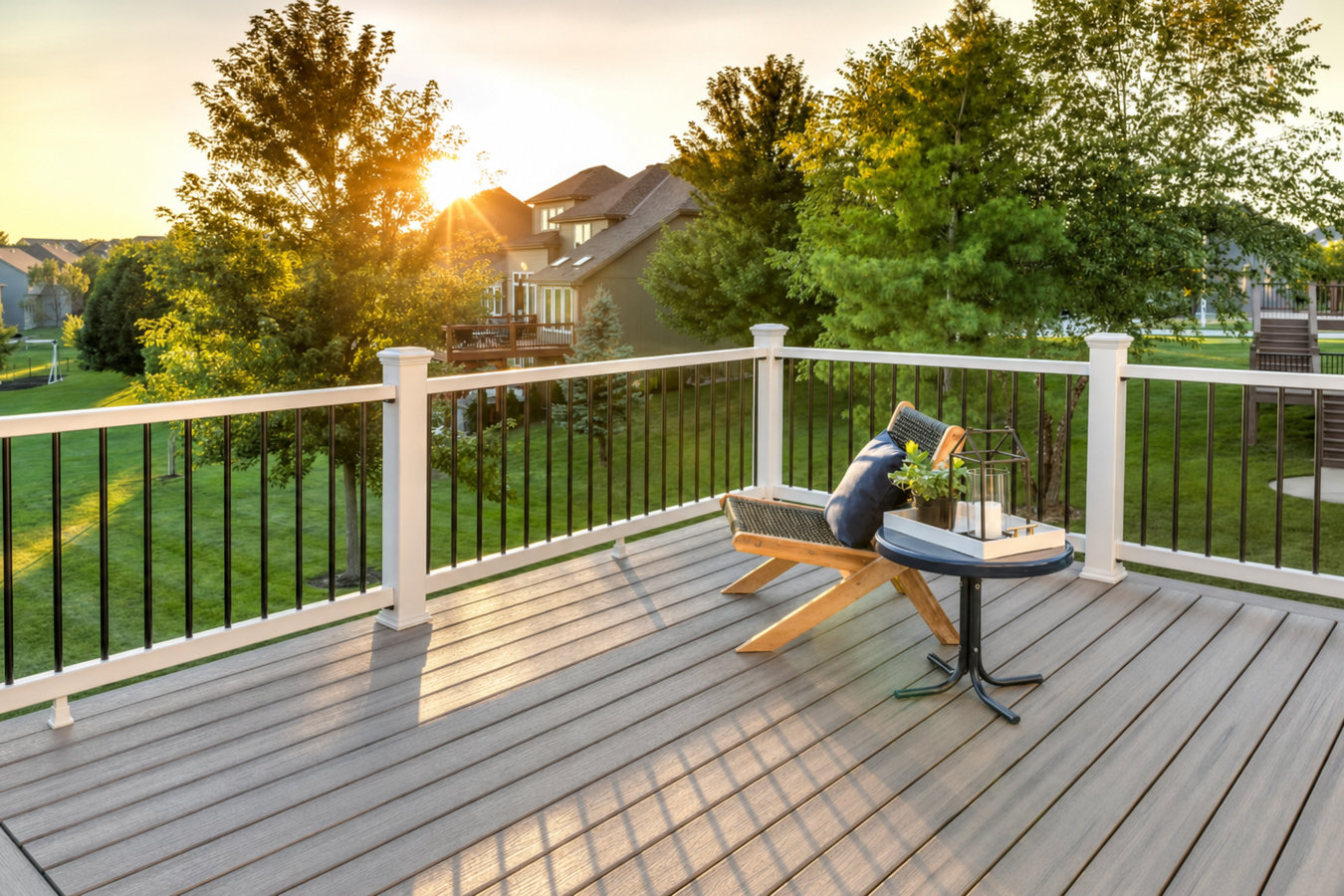
A wobbly railing is not just an eyesore - it is a safety issue. We install permitted, wind-rated deck railings in Coconut Creek that pass Broward County inspection and hold up in South Florida's climate for years.
Deck railing installation in Coconut Creek, FL involves removing old railing if present, inspecting the deck frame, setting new posts anchored into solid structural members, and attaching rails and balusters to meet Florida's height and spacing requirements - most residential jobs take one to two days of installation once permits are approved.
The structural connection between the post and the deck frame is where most railing failures originate. Posts anchored through the framing are fundamentally more secure than posts bolted to the surface boards - a distinction that matters especially on elevated decks and on homes with older framing that may have softened from years of South Florida humidity. If your deck is part of a multi-level project, our multi-level deck work integrates the railing system into each platform from the start rather than adding it as an afterthought.
The North American Deck and Railing Association (NADRA) publishes safety standards for baluster spacing, post anchoring, and load requirements that inform how a properly installed railing system should be built - not just what passes a visual inspection on the day of completion.
Grab your railing firmly and push outward. If it shifts, wobbles, or creaks, the posts are no longer anchored securely. This is the clearest sign your railing has stopped doing its job - and in a home with children or older adults, it is a safety issue that needs attention right away.
In Coconut Creek's humid climate, surface rust on metal railings and soft or spongy wood at the base of posts are early warnings of deeper structural problems. Once moisture gets into a post base, the damage spreads faster than it looks from the outside. If you can press your thumb into the wood near the base of a post, that post has already lost most of its strength.
Stand back and look at the vertical pieces filling in your railing panel. If the gaps look wide - wider than about four inches - your railing may not meet current safety standards. Older railings from the 1980s and 1990s, which are common in Coconut Creek, were often built to less stringent spacing rules than what is required today.
Florida requires railings to be at least 36 inches tall on most decks. If your railing hits you at mid-thigh, it was likely installed before current height rules took effect - or it was never built to code. A railing that is too short offers very little protection if someone stumbles near the edge.
Aluminum and composite deck railings are what we recommend for most Coconut Creek homeowners because of how they hold up in South Florida's heat, humidity, and proximity to salt air. Aluminum does not rust, does not need painting, and stays structurally sound for decades in this environment. Composite railings - made from a blend of wood fiber and plastic - resist moisture and UV fading in much the same way, while offering a look closer to traditional wood if that is what your HOA or your own preference calls for. Pressure-treated wood railings are available for homeowners who want a lower upfront cost and are prepared to seal and maintain them regularly. Whatever material goes up, every post is anchored into the structural framing of the deck - not just screwed to the surface - because post anchoring is what determines whether a railing holds when someone leans on it.
For homeowners whose railing issues are part of a larger project, combining a railing replacement with a custom deck design and build gives you a single permit application, a single crew, and a finished result where the railing and deck structure were designed to work together from the start.
Suits homeowners who want the lowest long-term maintenance - aluminum does not rust, rot, or require painting, and holds up well in Coconut Creek's coastal humidity.
Suits homeowners who want the durability of a synthetic material with a look closer to traditional wood - requires minimal maintenance and resists moisture and UV fading.
Suits homeowners who want a lower upfront cost with natural wood character - requires regular painting or sealing in South Florida's climate to maintain structural integrity.
Suits homeowners building or upgrading a multi-level structure - posts are anchored into the deck framing at each level, not just screwed into the surface boards.
Much of Coconut Creek's residential development happened between the late 1970s and mid-1990s, which means many decks in the area are now 25 to 40 years old. Railings on homes of this age often have posts anchored using methods no longer considered safe, and the underlying deck framing may have softened from decades of exposure to South Florida's humidity and afternoon rain cycles. A railing that was code-compliant when it was installed may no longer meet current height and spacing requirements - and a home inspector flagging that at a buyer's walkthrough is a problem that tends to show up at the worst possible time. Coconut Creek also sits roughly 10 miles from the Atlantic coast, which means metal components in any outdoor structure face a more corrosive environment than they would in an inland location. That is why material selection here is not just about aesthetics.
We install deck railings throughout Coconut Creek and the surrounding area, including homeowners in Pompano Beach and Deerfield Beach who face the same coastal climate conditions and HOA approval requirements. Broward County's high-wind zone requirements apply uniformly across all three cities, so the anchoring method and hardware we use in Coconut Creek is the same standard we follow throughout the region.
We ask about your deck size, what your current railing looks like, and whether you are in an HOA community. Most estimates are done in person so we can check the condition of your existing deck frame before quoting. We respond within one business day.
We apply for the Broward County building permit before any work begins, and help you submit the HOA approval request if your community requires one. This step typically takes one to two weeks. Nothing is ordered or installed until approvals are in hand.
Before any posts go in, we inspect the deck framing at each attachment point. If any framing has softened from moisture, we address it first. On most standard decks, the full installation is complete in one day.
After installation, we schedule the Broward County inspector to verify the work. Once the inspection passes, we walk you through the finished railing - how the posts are anchored, what to watch for over time, and what maintenance your chosen material needs.
We handle the Broward County permit and HOA paperwork - you just pick the day.
(754) 294-8695Many Coconut Creek homes were built in the 1980s and 1990s, and decades of Florida humidity can quietly soften the framing inside an older deck. We probe the structure at every post location before anchoring anything - because a new railing anchored into rotted wood is no safer than the old one. This step is not optional on our jobs.
Broward County's building code requires deck railings to withstand the wind loads that come with South Florida storm seasons. Every post we install is anchored into solid structural framing using hardware that meets these requirements - not just lag-bolted to the decking boards on top. A county inspector signs off that the work was done correctly before the permit is closed.
Coconut Creek's planned communities - including areas within Wynmoor and Centura Parc - often require both HOA architectural approval and a county building permit before railing work can proceed. We manage both submissions in the correct sequence so you are not navigating two separate bureaucracies on your own.
Coconut Creek sits roughly 10 miles from the Atlantic coast, which means railings here face relentless humidity, UV exposure, and salt-laden air. We recommend aluminum and composite over wood for most projects because of how these materials actually perform in this specific environment - not just because they look good in a catalog.
Every railing project we complete in Coconut Creek ends with a closed permit on record - documentation that a county inspector verified the work is structurally sound. That record follows the home and protects you whether you plan to stay or sell.
Florida contractor license verification is available through the Florida Department of Business and Professional Regulation. Deck safety guidelines are published by the U.S. Consumer Product Safety Commission.
A full deck project from layout design through permitted construction - railing is integrated from the start rather than added after the fact.
Learn MoreTwo- and three-level outdoor platforms where code-compliant railing on every elevated section is a required part of the build, not an optional upgrade.
Learn MoreWe handle the Broward County permit and HOA paperwork - you just pick the day. Call or request a free estimate now.